
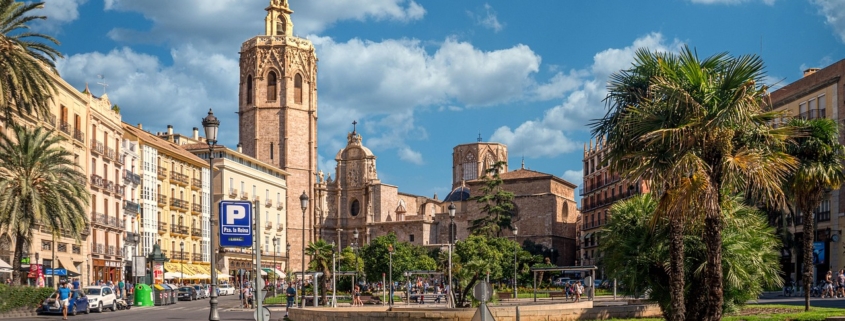
One day in Valencia, what can you see? Well, no. Who bought these tickets? Of course, with the TouringBee audio guide, even in half a day you can walk around, taste the most delicious food, and buy souvenirs. But you can’t do that! This is Valencia!
» READ MORE – Top 20 interesting cities in Spain
Why is Valencia worth visiting?
Valencia is a city where old streets coexist with futuristic buildings, and life revolves around the sea and delicious food. Here, you don’t have to choose between culture and relaxation: during the day, you can visit museums, and in the evening, you can sit by the sea with a glass of sangria. The atmosphere is as relaxed and friendly as it gets – just what you need for a stress-free holiday.
Green parks
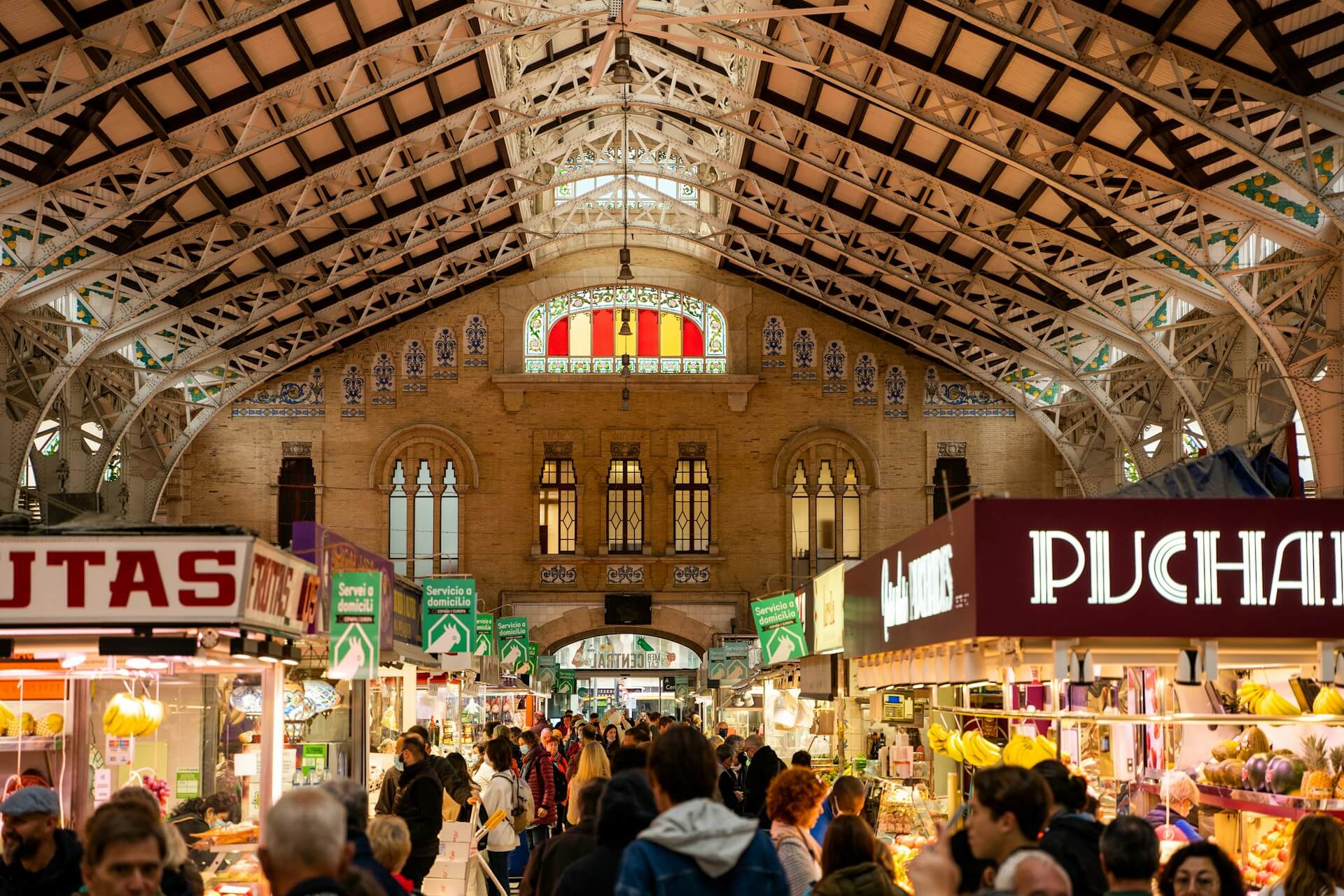
Central Market
Flamenco
Torres de Serranos
Read below to find out what to see in Valencia in one day – these tips will be useful for everyone. You can spend the rest of your holiday relaxing on the beach.
Where to stay in Valencia?
The choice of neighborhood in Valencia depends on how you want your holiday to be — each area has its own character.
Conveniently located between two train stations. Plenty of good cafés and excellent shopping.
Perfect for those who want to stay close to the main attractions. It’s also near the Nord train station.
Near Malvarrosa Beach, it’s ideal for those who enjoy morning swims and evening gatherings with sangria and sea breezes. The downside is that it’s about 20–25 minutes by metro to the city center.
It’s free in Valencia
Valencia is a generous and open city. You can spend a whole day here without hardly taking out your wallet: from walks in the parks to visits to museums, where admission is exactly €0.
- Admission to Valencia Cathedral is free two hours before closing
- The Museum of Fine Arts with paintings by Goya and Ribera, the Natural History Museum with dinosaur skeletons, and the L’Almoina Museum with the remains of ancient Roman Valencia are free
- The beaches of Malvarrosa and Patacona offer clean sand and sea without any ticket
- Street festivals, especially Las Fallas in spring, feature free shows and fireworks
- Climbing the Torres de Quart and Torres de Serranos on Sunday offers an excellent view of the city
Plan for the day: how to do everything in 24 hours
In 24 hours in Valencia, you can experience it all – the sea, the market, paella, a walk through the Old Town, museums, and an evening show to top it off. The city feels like a celebration even on an ordinary day.
Where to leave your luggage?
There are luggage storage facilities at Valencia's train stations. There are also some at the airport, but they tend to be more expensive.
To free up space in your hotel room, you can find storage locations in the city center. Look for Locker in Valencia, Stasher, LuggageHero, and Bounce lockers. You can book in advance through their apps.
A special Valencia life hack: every bike rental shop will store your luggage. And if you rent a bike, the service is free!
Breakfast – start your morning on a sweet note
Start your morning in Valencia with a cup of strong coffee and a glass of horchata, a local drink made from tiger nuts, similar to nut milk. It’s traditionally served with sweet fartons buns or crispy churros.
The coziest places for this kind of breakfast can be found in the Ruzafa district.
This trendy neighborhood has small cafés and bakeries where prices remain reasonable – only €3–5 – and the atmosphere feels genuinely authentic.
Morning – sea, sun, and light walks
Before lunch, head to the sea – the beaches of Malvarrosa and Patacona are only 20 minutes from the center.
- Malvarrosa is a lively beach with plenty of cafés
- Patacona is quieter and more spacious
All beaches are free (sun loungers cost around €5–7 per day).
Tip: bring a towel and drinks with you – it’ll save you money. Swimming in the sea is best in the morning when the water is cleaner and the sun is still gentle.
Lunch – try all the local specialties
Valencia is the birthplace of paella, so that’s the best place to start. The classic choice is paella Valenciana (with rabbit, beans, and herbs) or the seafood version with prawns and mussels. But paella isn’t the only local dish. Try these as well:
- Fideuà – paella with vermicelli instead of rice
- Esgarraet – an appetizer made with aubergines and peppers
- All i pebre – eel stew
- For dessert, bunyols – doughnuts sprinkled with sugar
The best places for gastronomic adventures are the Central Market (Mercado Central), Calle Caballeros, or the trendy Ruzafa district, which has many tapas bars.
Prices range from €3 for tapas to €15–18 for a serving of authentic paella.
After lunch – a walk through history
The afternoon is perfect for strolling through the Old Town.
- Start at Plaza de la Virgen, visit the Cathedral, and climb the Miguelete tower for a panoramic view
- Walk to Torres de Serranos and see the ancient gates that once protected the city
- If you have extra time, visit the Museo Fallero or IVAM (Museum of Modern Art) – admission is free on Sundays
Tip: take the TouringBee audio guide to Valencia with you – it will be your personal tour guide. Downloading it via QR code takes just a couple of minutes, and the walk with voice commentary turns into a mini-adventure.
Dinner with a view
After a day of exploring, enjoy dinner with a view of the sea or the city. Good options include restaurants on the Malvarrosa promenade, where fresh seafood is served in the evening.
Try arroz negro (rice with squid ink) or baked cuttlefish.
Prices are above average (€15–25 for a main course), but the atmosphere and sunset by the sea are worth it.
Evening show
Sunny and lively during the day, Valencia turns into a real party at night. End your day with an evening show:
- Flamenco show in a small tablao (tickets €15–25, best to book in advance)
- Concert on the open-air stage of the Palau de la Música in Turia Park
- Open-air cinema in city parks during summer
It’s best to arrive 30 minutes early to get good seats. Valencia truly comes alive in the evening.
10 ideas for things to do in Valencia in a day
- Start with coffee and horchata in the center – a refreshing drink made from tiger nuts, with churros or fartons
- Stroll through the Central Market – colorful fruits, jamón, spices, and countless photo opportunities
- Visit the Cathedral and climb the Miguelete tower for a panoramic view
- Sit in Plaza de la Virgen and enjoy the atmosphere by the fountain
- Wander through the Turia Gardens, a former riverbed turned into a huge park
- Explore the City of Arts and Sciences – a futuristic complex that looks like something from a movie
- Visit L’Oceanogràfic, the largest aquarium in Europe – simply stunning
- Have paella for lunch where it originated – the classic version with rabbit and beans or seafood
- Count the graffiti in El Carmen district – an open-air gallery perfect for street photography
- Watch the sunset on Malvarrosa Beach – with a glass of sangria and the sound of the Mediterranean Sea
Top 5 sights to see in Valencia
Central Market (Mercado Central)
A huge Art Nouveau-style indoor market filled with fruits, jamón, spices, cheeses, and ready-made snacks. Even if you don’t buy anything, it’s worth visiting for the atmosphere and architecture.
- Tip: open only until around 2:30 p.m., so go right after breakfast. Admission is free, but you’ll need to pay for any delicacies you want
Old Town (Ciutat Vella)
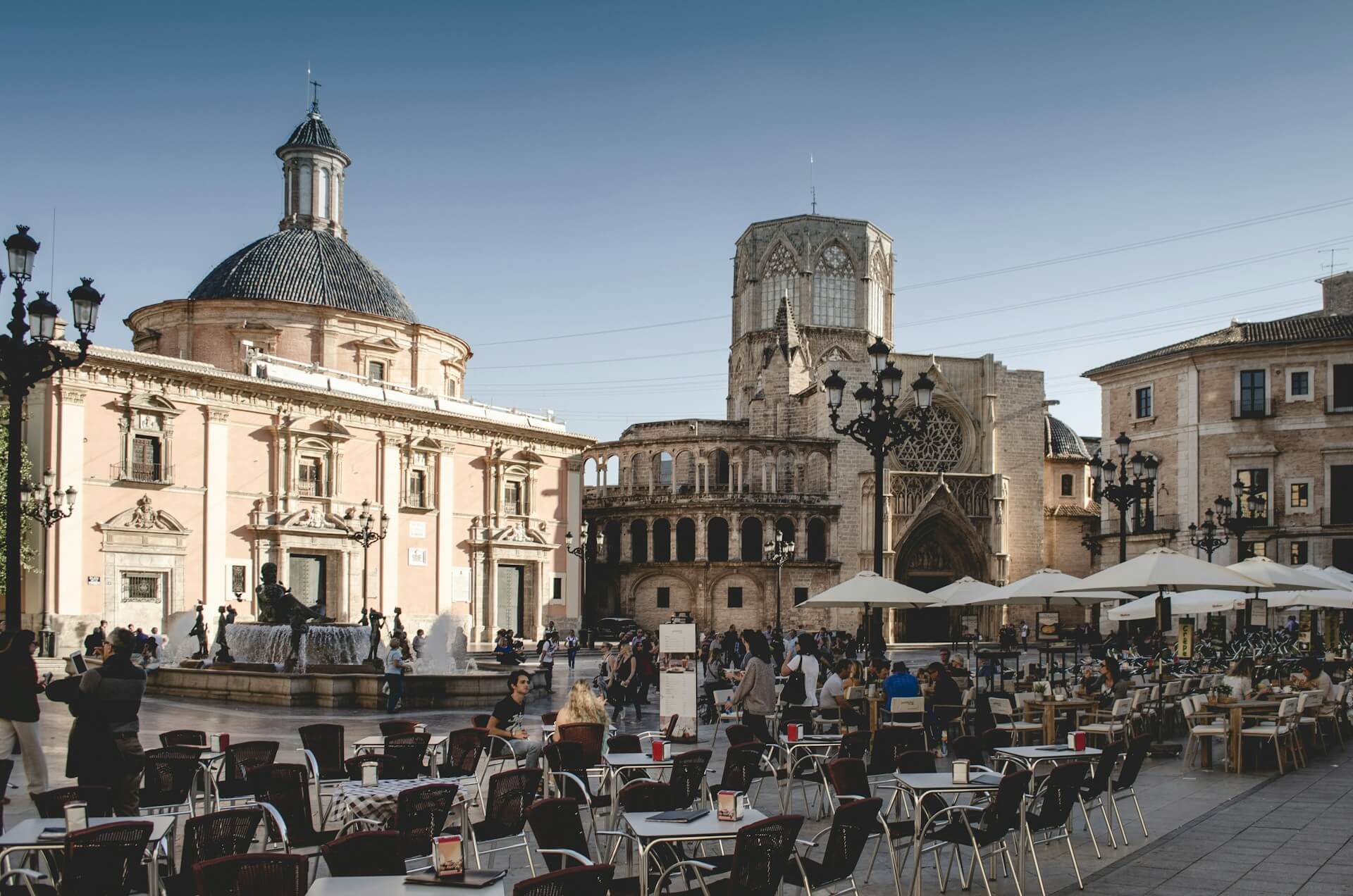
Narrow streets, Gothic buildings, and lively squares. Plaza de la Virgen and Plaza de la Reina are must-sees. Valencia Cathedral, which houses the chalice believed to be the Holy Grail, is at the center. Climb the Miguelete tower for the best city views.
- Tip: admission to the cathedral is around €8. It’s quieter in the morning and on weekdays
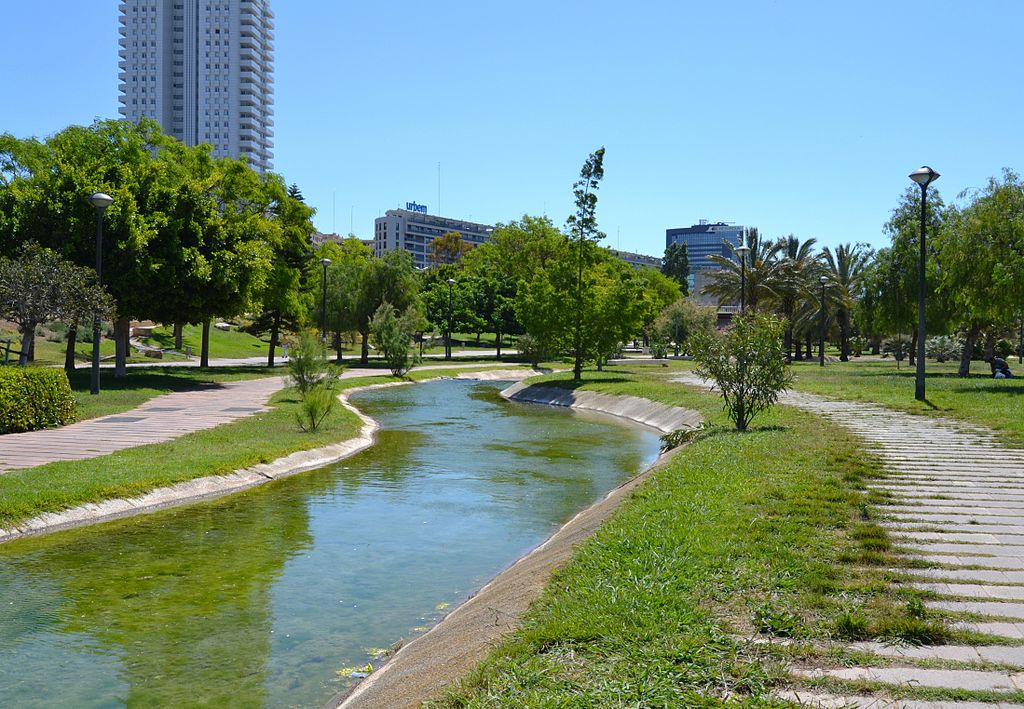
Turia Gardens (Jardín del Turia)
A former riverbed transformed into a 9-kilometer park with bike paths, fountains, gardens, and recreation areas. Inside are the Palau de la Música and the Gulliver children’s park.
- Tip: free admission, no queues. Start your walk at Torres de Serranos and head toward the City of Arts and Sciences
Torres de Serranos y Quart
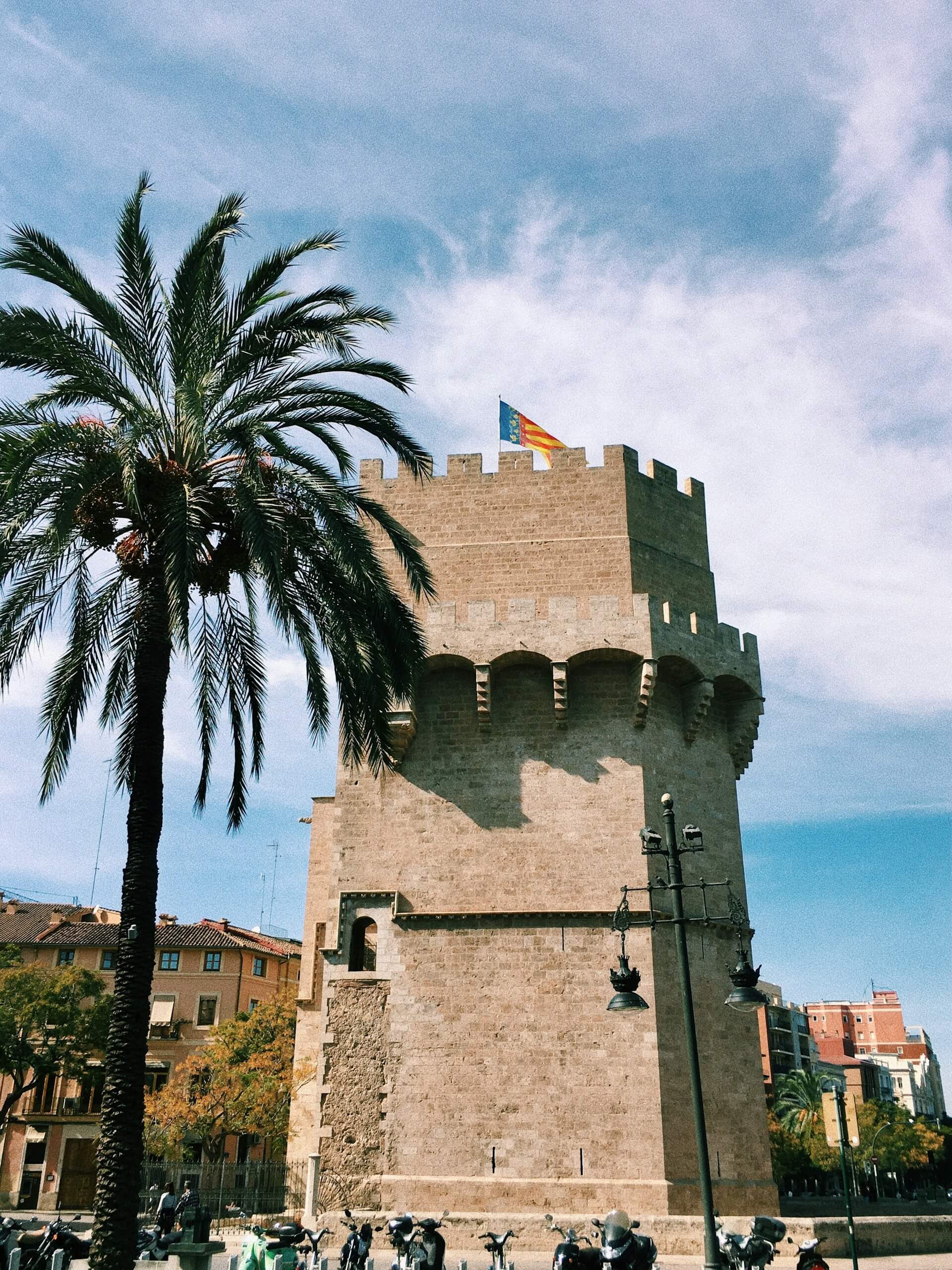
Ancient gates that once guarded Valencia, offering excellent views of the city and Turia Gardens.
- Tip: tickets cost €2, free on Sundays. Minimal queues. The spiral staircases are best for active visitors
City of Arts and Sciences (Ciudad de las Artes y las Ciencias)
A futuristic complex by architect Santiago Calatrava, housing a huge planetarium, science museum, and L’Oceanogràfic — Europe’s largest aquarium.
When to go: early morning for fewer crowds or evening for photos with illuminated buildings.
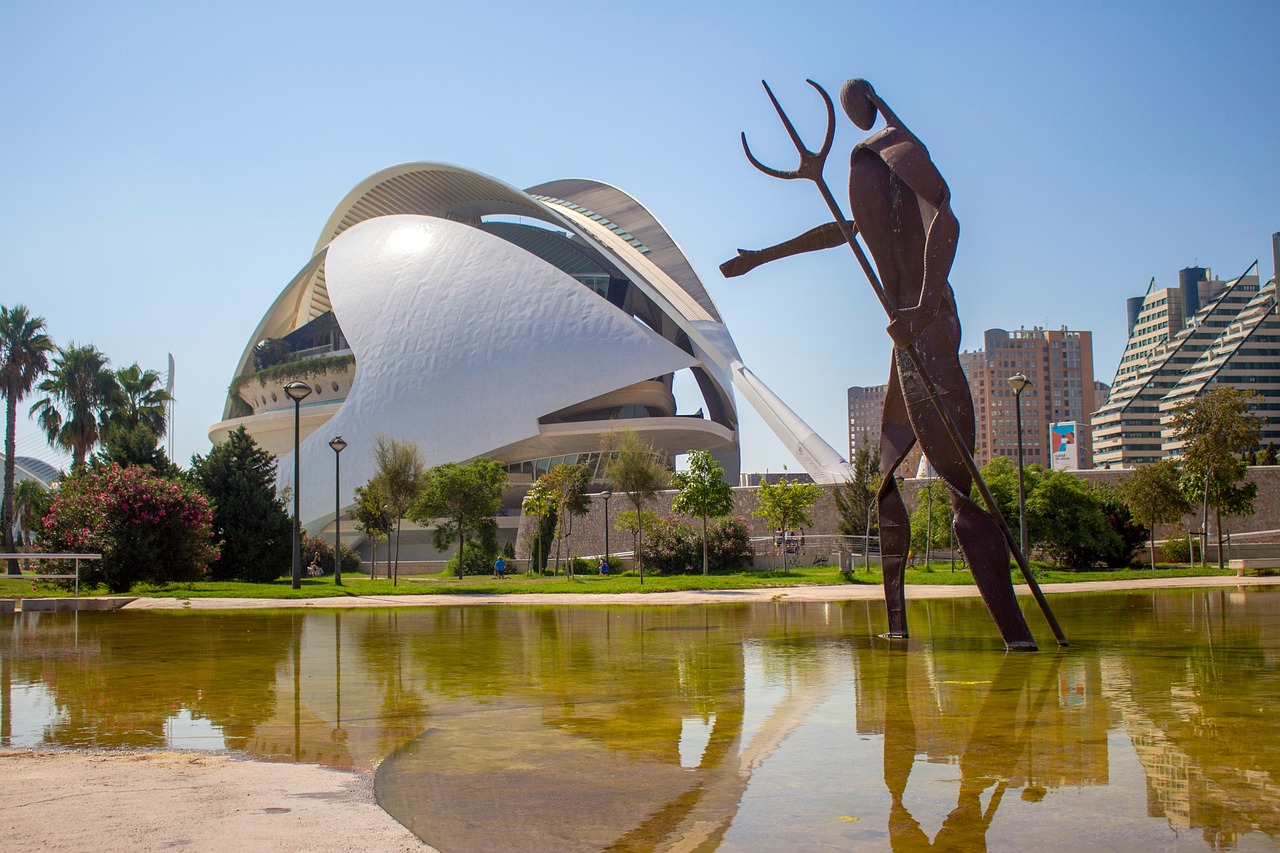
It’s best to buy tickets online, especially for the aquarium, as queues can be long.
Science Museum, Oceanogràfic Aquarium, and Hemisfèric CinemaCombined tickets for multiple museums are also available.
The TouringBee audio guide offers a similar route, showing you two dozen additional sights and sharing fascinating stories along the way.
A bit of Valencia’s history
Walking around Valencia, it’s easy to forget this isn’t just a sunny resort with paella and oranges. These key milestones reveal its rich past:
- 138 BC – founded by the Romans as Valentia. Forum remains can be seen under Almoina Square
- 8th century – the Moors introduced oranges and irrigation canals, some still in use today
- 1238 – King Jaime I took the city from the Moors. Valencia became Spanish but retained strong Eastern influences. Cathedral construction began
- 15th century – Valencia’s golden age: first books in the Pyrenees printed here, and the Silk Exchange (Lonja de la Seda) was built – now a UNESCO site
- 19th century – rapid growth with railways, Central Market opening, and modernist neighborhoods
- 1936–1937 – during the civil war, Valencia briefly became Spain’s capital
- Late 20th century – renovated for the Expo and America’s Cup. Turia Gardens and the City of Arts and Sciences were built
- Today – Spain’s third-largest city, capital of paella, the Fallas festival, and one of the most vibrant Mediterranean destinations
Symbols and landmarks
People and traditions
Valencians are open and lively. They love street concerts, evening gatherings, and, of course, festivals – there are almost as many holidays as workdays.
The local tradition is to meet in the squares in the evening, chat, drink Agua de Valencia (a cocktail with oranges, cava, and spirits), and watch fireworks. They are also proud of their language, Valencian, which you’ll notice in street names.
When walking around Valencia, remember: you’re strolling on a stage where a performance called «life in Valencia» has been playing for two thousand years.
Useful tips for travelers in Valencia
- Parking: in the center, it’s expensive and limited (blue zones cost €2–3 per hour). Cheaper parking is available on the outskirts or near metro stations
- Taxi or metro? Taxis are convenient at night or from the airport (€15–20 to the center). During the day, take the metro or bus: tickets cost around €1.5–2. Day and three-day passes are available
- What to bring: sunscreen (even in spring), comfortable shoes for cobblestone streets, a water bottle (drinking fountains are common)
- Language: most people speak Spanish, but English is understood in tourist areas. A smile and a few Spanish words go a long way
- Food: lunch starts late – after 1:30 p.m., and dinner begins around 9:00 p.m.
- Festivals: visiting in March for Las Fallas? Book accommodation well in advance. Other months are quieter and cheaper
What to see in Valencia on the second day?
After spending your first day exploring the beaches and Old Town, spend your second day discovering Valencia beyond the classic postcard views.
- Albufera: a nature park and lagoon 10 km from the city with boating, bird watching, and rustic paella at authentic restaurants
- Jardines de Monforte: a classical-style park with fountains and sculptures – a true hidden gem
- Valencia Bioparc: a modern zoo without bars, with animals living in spacious, natural-like habitats
What to bring back from Valencia
Souvenirs from Valencia are more than just magnets. Take home a piece of Spanish spirit for yourself or loved ones:
- Orange jam or liqueur – a bottled symbol of Valencia
- Agua de Valencia – ready-made cocktail sets available
- Ceramics from Manises – traditional painted plates, cups, or tiles
- Handcrafted fans – elegant and practical
- Silk products – a nod to Valencia’s silk trading history
- Ninots figurines – miniatures of Las Fallas festival characters
- Turrón and boxed horchata – sweet and easy to pack
- Valencia CF T-shirt or scarf – perfect for football fans
- Local spices and rice for paella – to recreate Valencia at home
- Premium olive oil – often beautifully packaged
Valencia is a wonderful city for a relaxed, fun, and slightly educational holiday. The sea, oranges, flamenco, and ancient towers with stunning views – what more do you need? You can stay for two weeks or just one day and still feel like you’ve seen it all. Come and visit!
 Jorge Fernandez / Unsplash
  cmophoto.net / unplash
  Story Taler / Pixabay
  Jacek Dylag / Unsplash
 Jega Muthu / Unsplash
Leave a Reply
Want to join the discussion?Feel free to contribute!